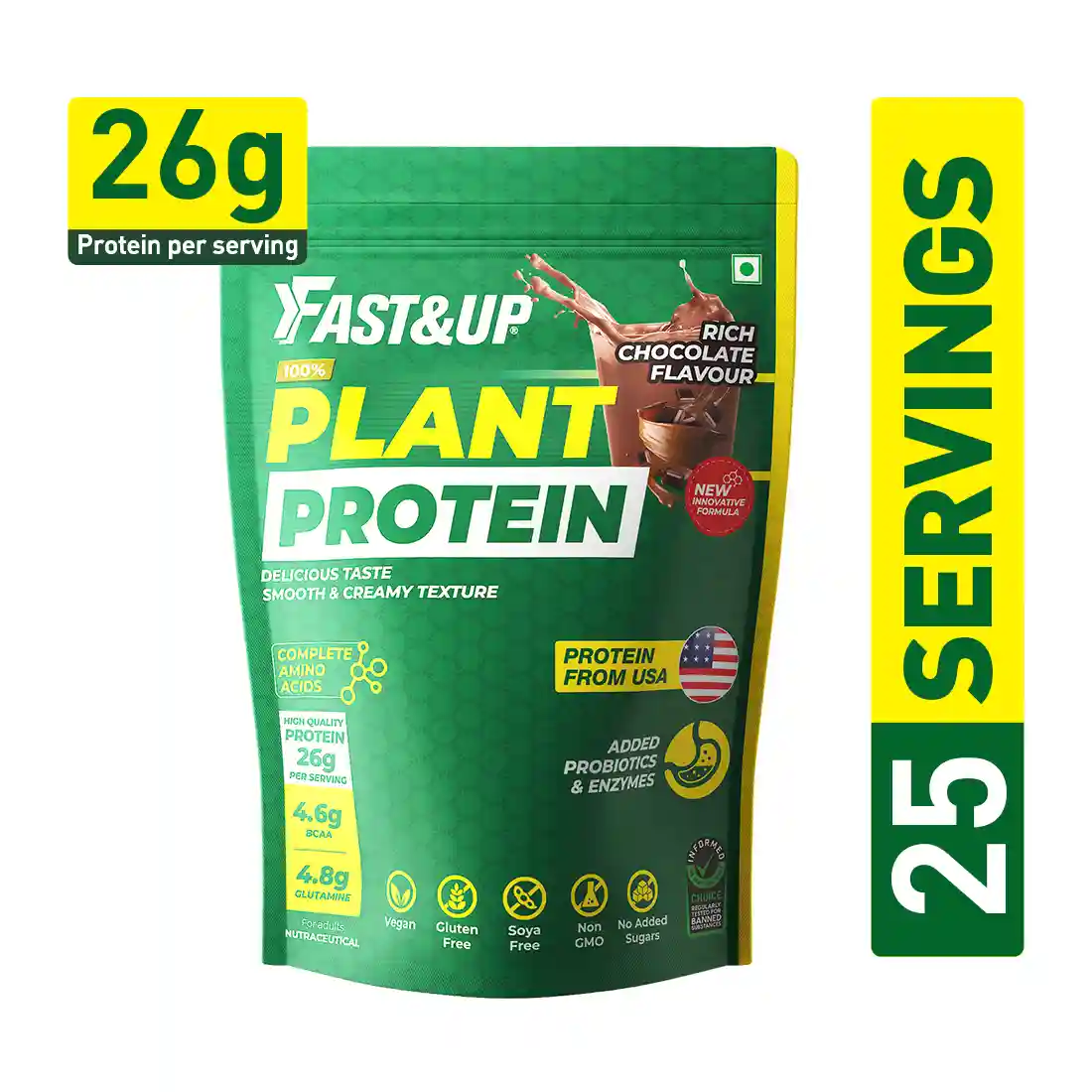

FAST&UP PLANT PROTEIN -100% PREMIUM QUALITY VEGAN PROTEIN 825gm, Rich Chocolate
MRP: ₹2,965.00
Save ₹847.00 (29%)
In Stock!
Flavour Name : Rich Chocolate | 825gm
Deliver to
Enter Pincode to check Delivery Date
| Brand | Fast&Up |
| Flavour | Rich Chocolate |
| Item Weight | 825gm |
| Diet Type | Vegetarian |
| Item Form | Powder |
| Age Range | Adult |
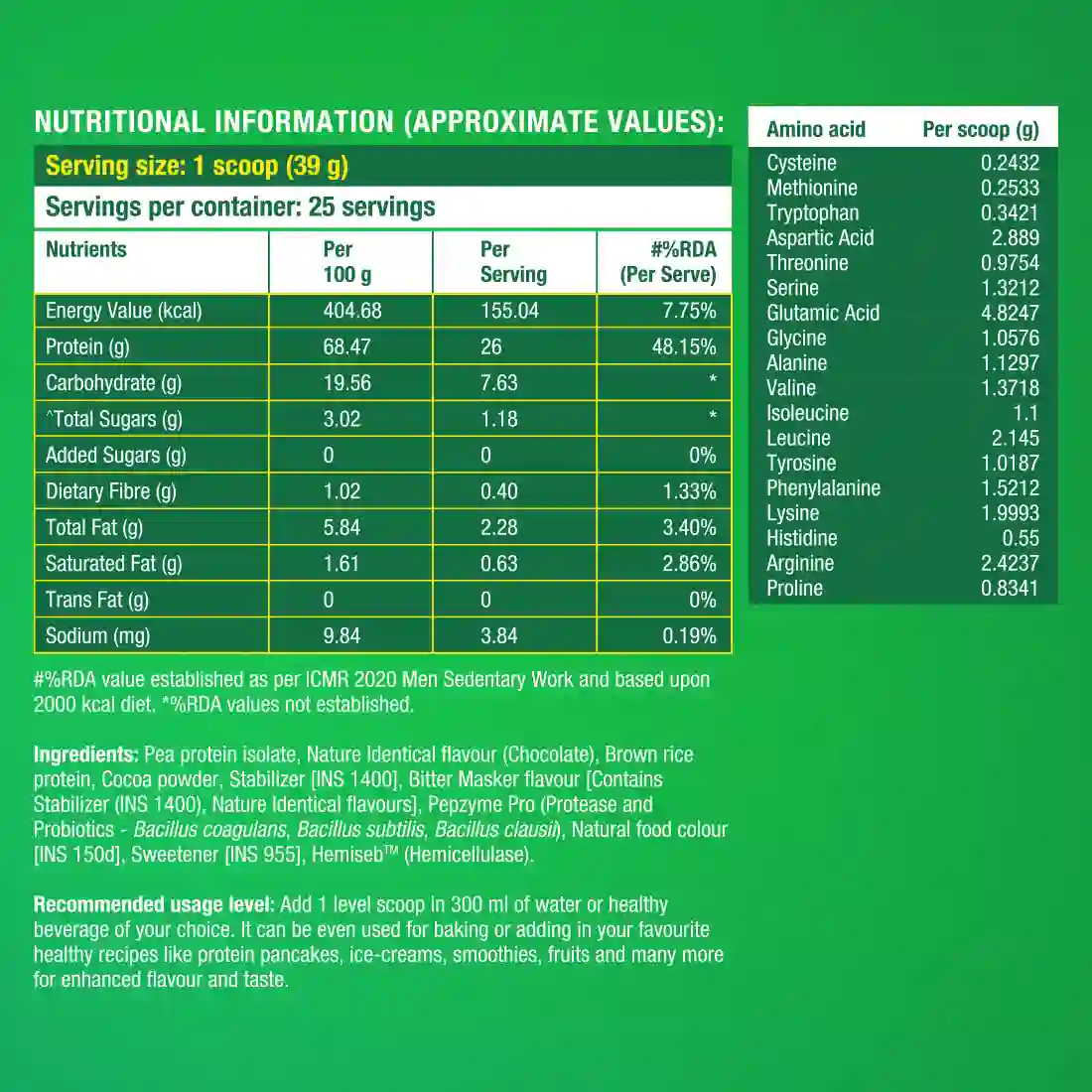
| Serving per Container | 25 |
FAST&UP Plant Protein | 100% Premium Quality Vegan Protein
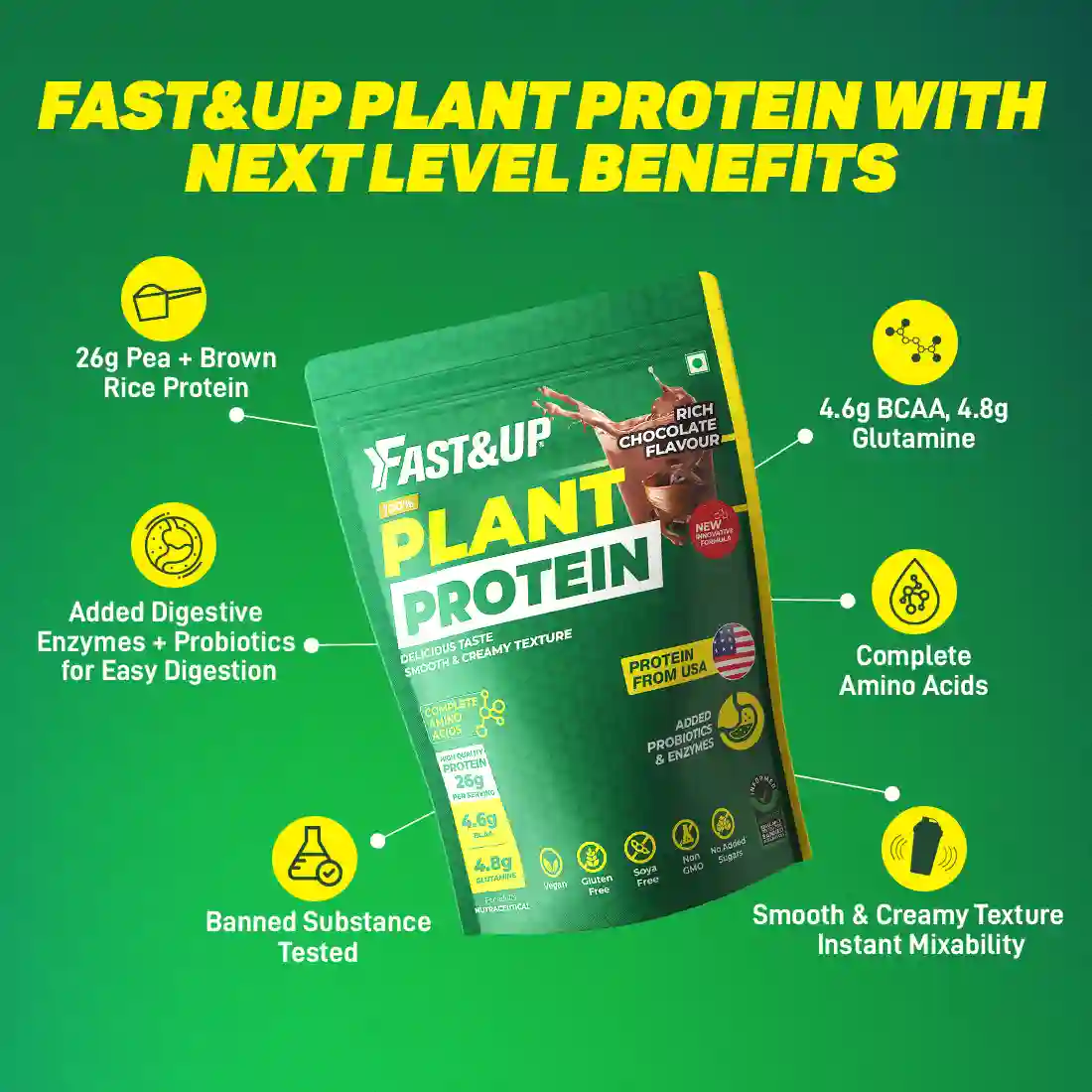
FAST&UP Plant Protein is a premium vegan protein supplement designed for individuals looking for a convenient plant-based source of protein. Ideal for fitness enthusiasts, athletes, and anyone following a vegan or plant-focused lifestyle, it can help complement your daily protein intake and workout nutrition.
Whether you’re building strength, supporting post-workout recovery, or simply looking for a convenient protein option, FAST&UP Plant Protein fits easily into an active and balanced lifestyle.
Key Features
- 100% Vegan Protein
- Premium-quality plant-based protein
- Suitable for vegan and plant-focused diets
- Supports daily protein requirements
- Helps support muscle recovery and growth
- Ideal for fitness enthusiasts and active individuals
- Convenient for post-workout or between-meal nutrition
Benefits
- Provides a convenient source of plant-based protein
- Helps meet daily protein requirements
- Supports muscle recovery after exercise
- Complements strength and fitness training
- Easy to incorporate into smoothies, shakes, and everyday meals
How to Use
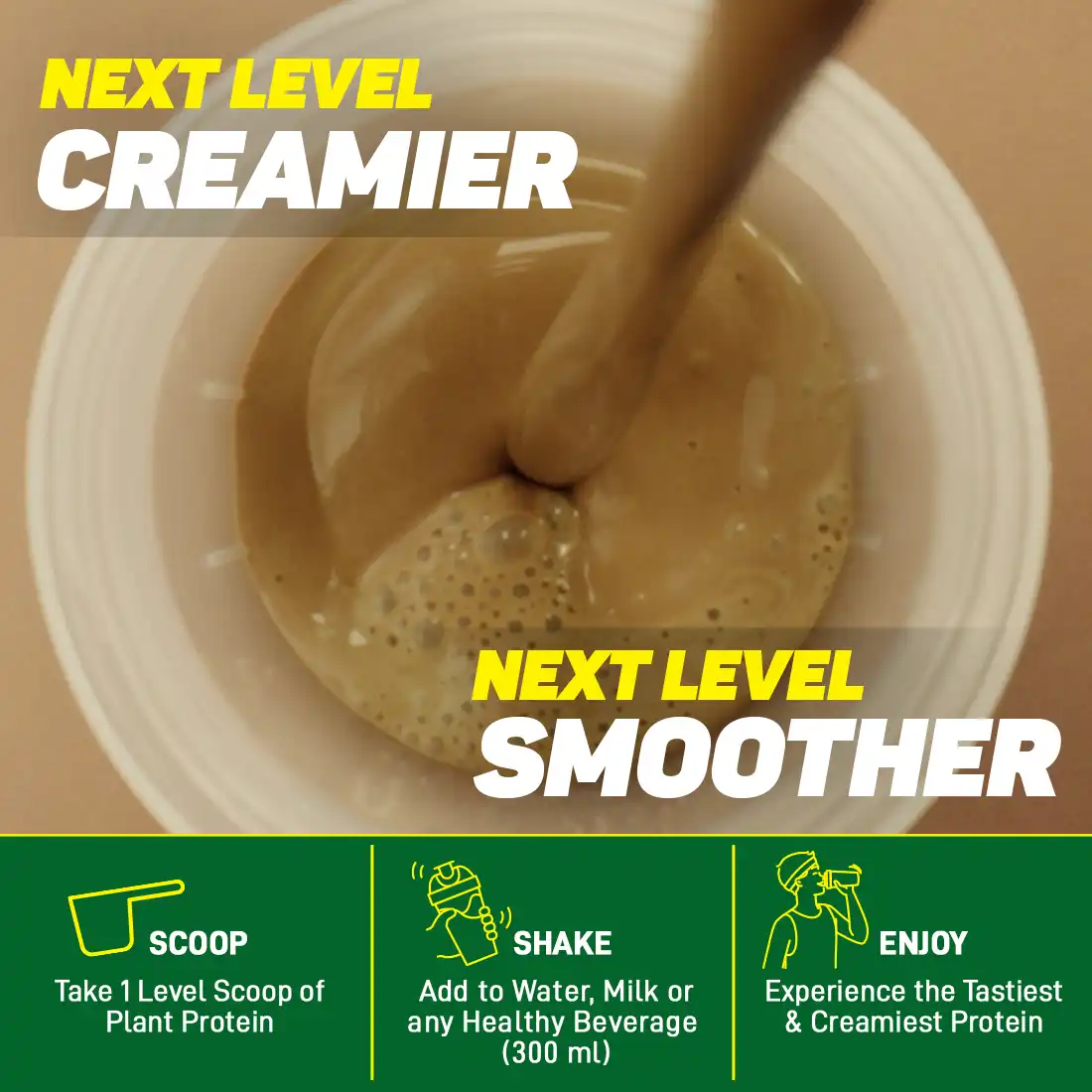
Mix the recommended serving with water, plant-based milk, or your preferred beverage. Shake or blend thoroughly and consume as directed on the product packaging.
Best Time to Take
Enjoy after workouts, between meals, or anytime you need additional protein as part of your daily nutrition plan.
Important Information
Use only as directed on the product label. This product should complement a balanced diet and healthy lifestyle. Store in a cool, dry place away from direct sunlight and moisture. Keep out of reach of children.
Brand: FAST&UP
Product: Plant Protein
Type: Vegan / Plant-Based Protein
Category: Vegan Protein / Sports Nutrition
Brand Details
Fast&Up is an Indian sports nutrition and active lifestyle brand known for its effervescent supplements. They offer a range of products including energy gels, hydration drinks, and multivitamins. The brand emphasizes using Swiss effervescent technology for faster absorption and bioavailability of nutrients.
We would love to know what you feel about the product
Write a ReviewNo Review Yet!


Eddy Wilson NITRA-PURE Performance Blend – Chocolate

Eddy Wilson Signature Series – WHEY Protein 78 servings 2.34kg
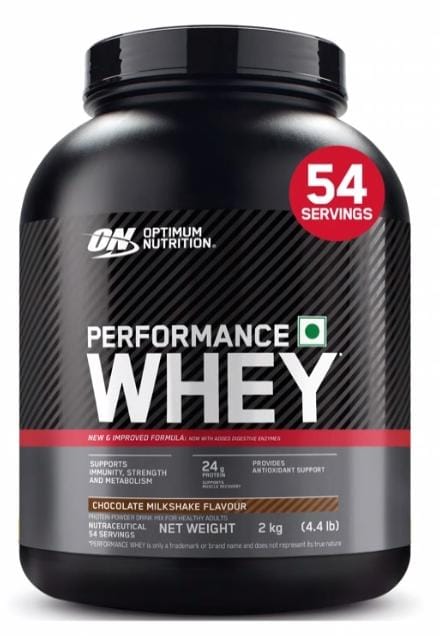
ON Performance Whey 4lb 54 servings
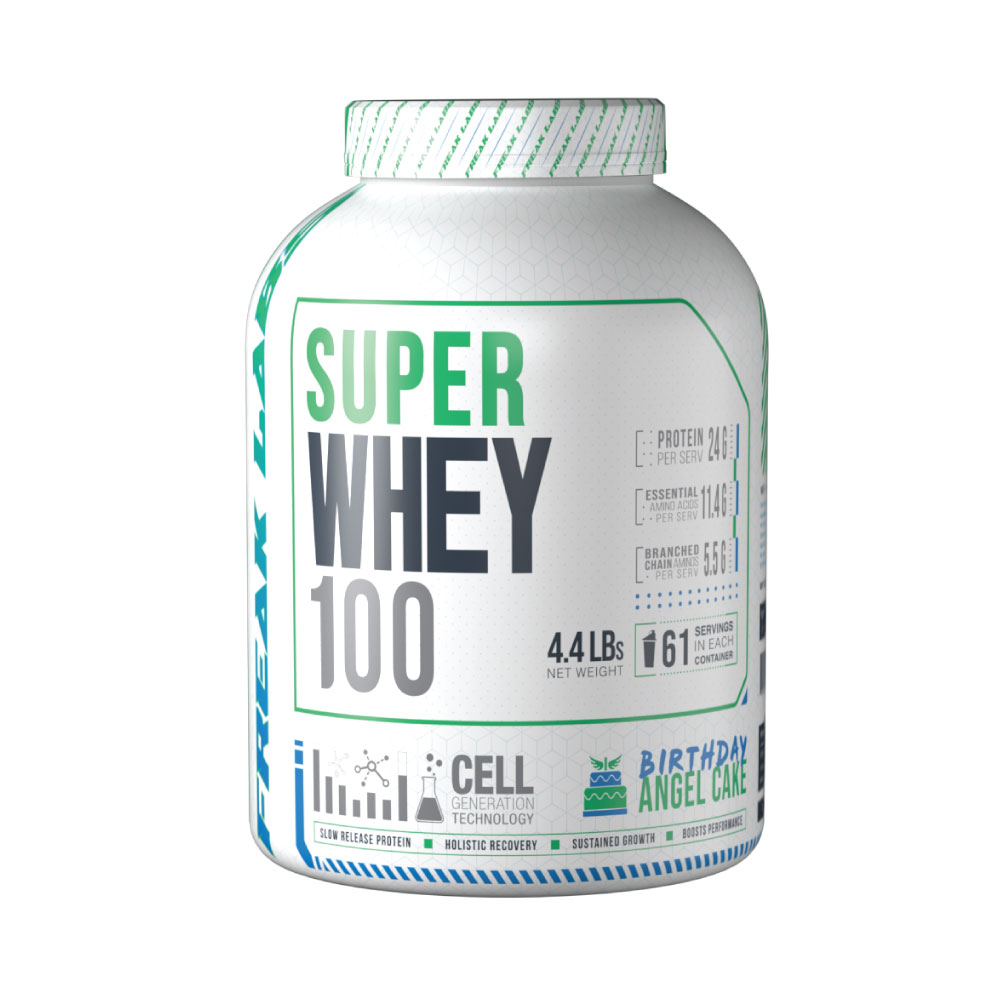
FREAK LABS SUPER WHEY 100
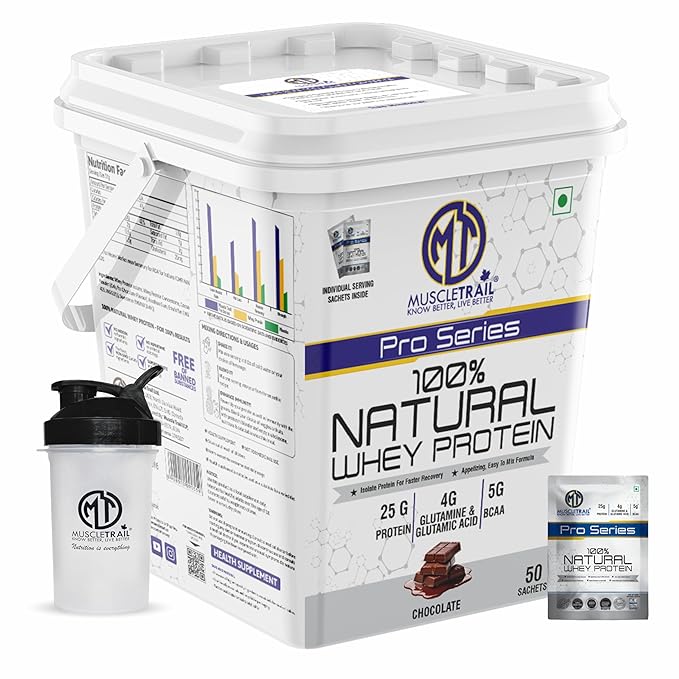
MUSCLE TRAIL PRO SERIES WHEY 50 servings
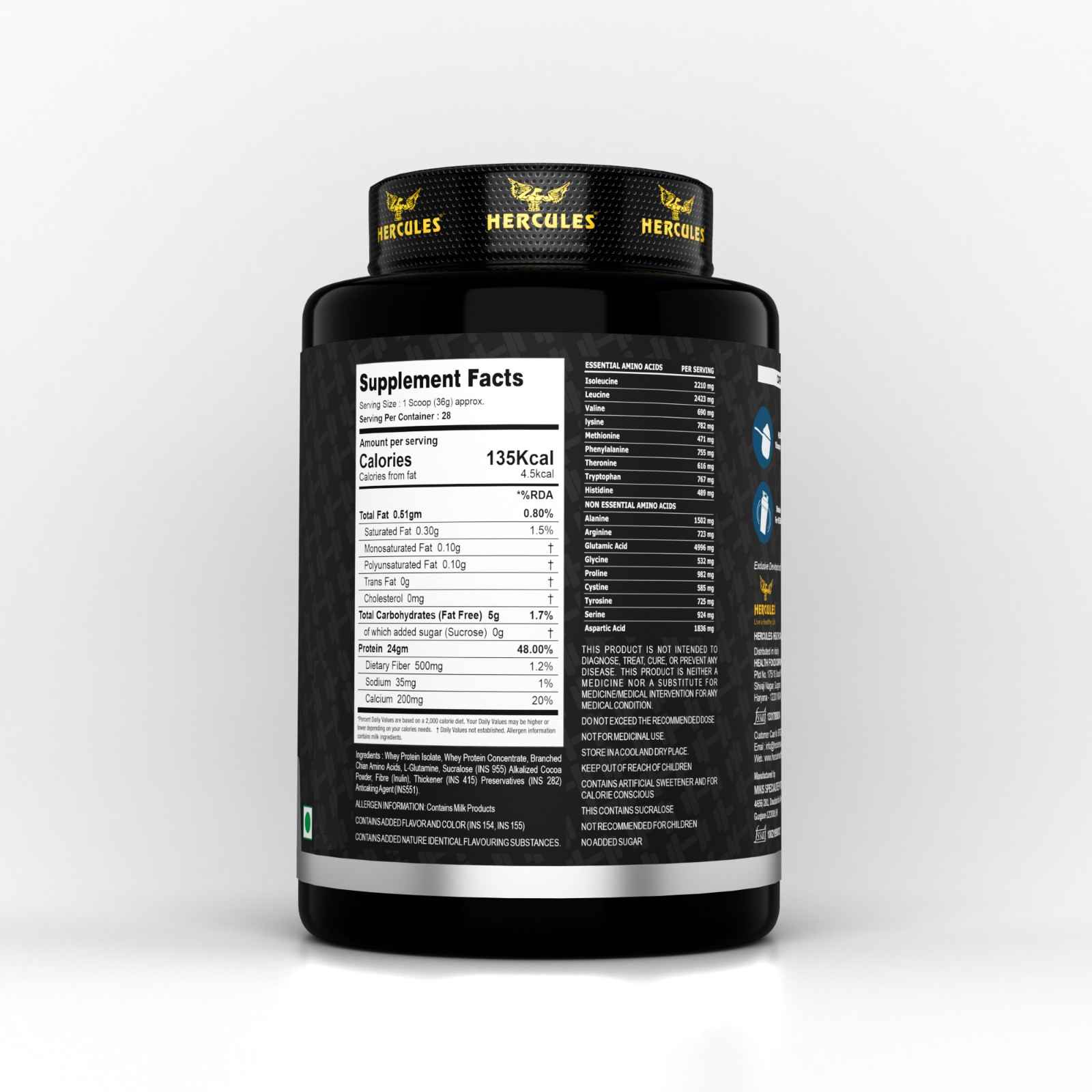
Hercules Rapid Whey Protein
FAST&UP PLANT PROTEIN -100% PREMIUM QUALITY VEGAN PROTEIN
